
Internship @ Daimler Truck North America
Role
UI/UX Designer Intern
Duration
June - November 2025
Introduction
First Glance of the Real World
My internship at Daimler Truck North America was an unforgettable and transformative journey. Over the course of five months, I deepened my understanding of user experience in the automobile industry and how important design in an industry centered around safety is. With little knowledge of the automobile industry, it was definitely challenging to learn the industry from ground up.
My Impact
During my internship, I designed UX systems for safety-critical and driver-facing interfaces in the automotive industry. I focused on structuring complex information and interactions to support clarity and efficiency.
I optimized Figma workspace environments for design and engineering teams, lead the development of the core framework for next-generation digital cockpit, collaborated cross-functionally with different departments, and conducted on-site user interviews to better understand real-world use cases.
Experience
Working With Amazing Designers & Engineers
Human-Machine Interface Team — I worked closely with a team of 9 members, including UX/UI designers, system engineers and vehicle product designers. Our roles and perspectives varied significantly, but collaborating across these disciplines further developed strong communication and alignment skills. Our shared understanding of both user needs and technical constraints helped us strive for a common goal, improving the lives of drivers.
Optimizing Workspaces
During this project, I utilized Figma's full potential to create a scalable workspace environment for Designers and Engineers. I structured this environment to support the development of various HMI components, including development playgrounds and sitemaps.
Developing Future Vehicle Framework
My goal was to evaluate and analyze design methodologies across past and current Daimler models, to design new digital menu structures for next generation in-vehicle instrument clusters and infotainment screens.
This project involved multiple research and cross-functional layers. I first initiated meetings with product owners, engineers, and designers to understand the system requirements and user priorities. Through iterative feedback sessions, we as a team identified which navigation elements should be retained or refined based on technical feasibility.
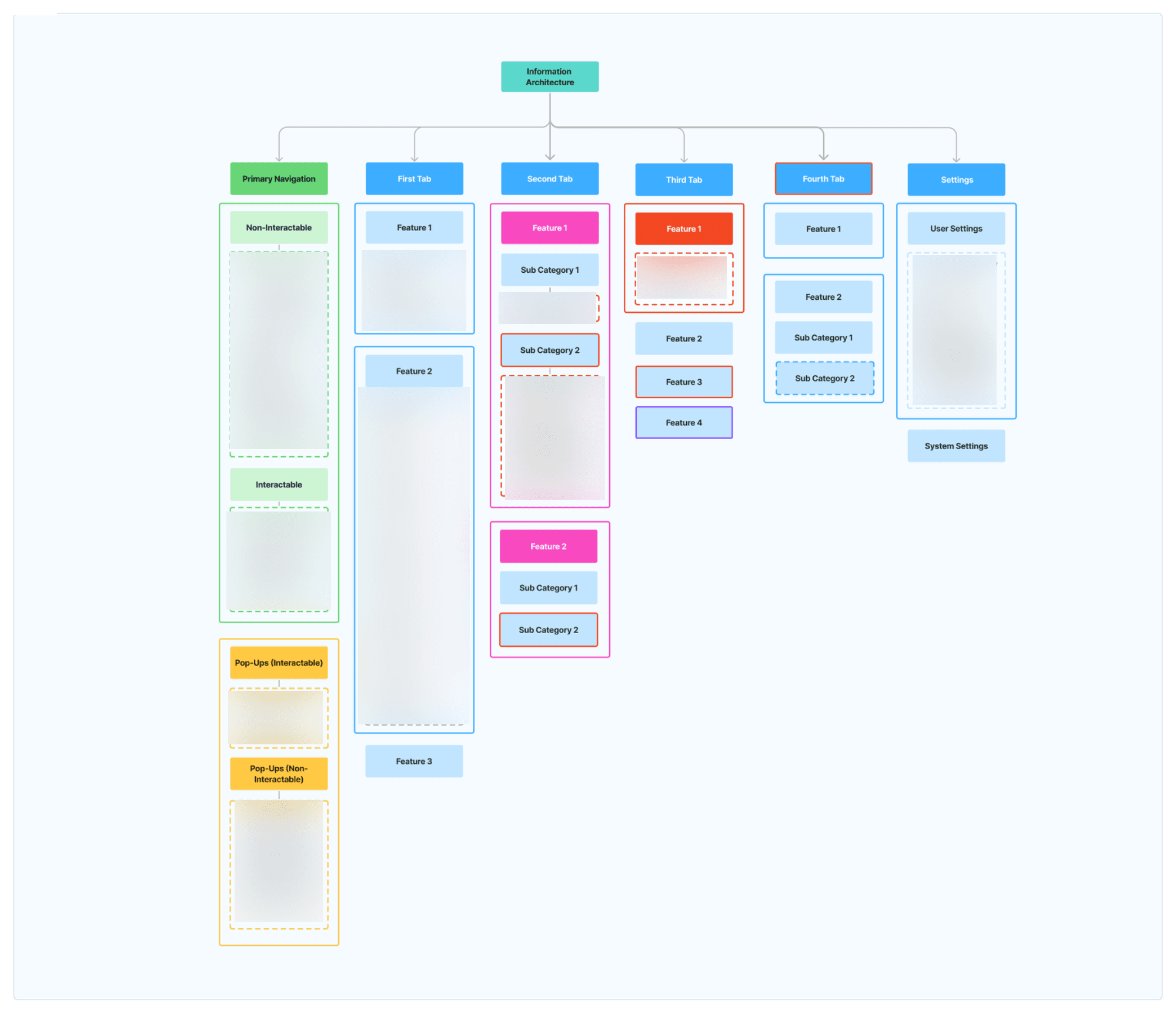
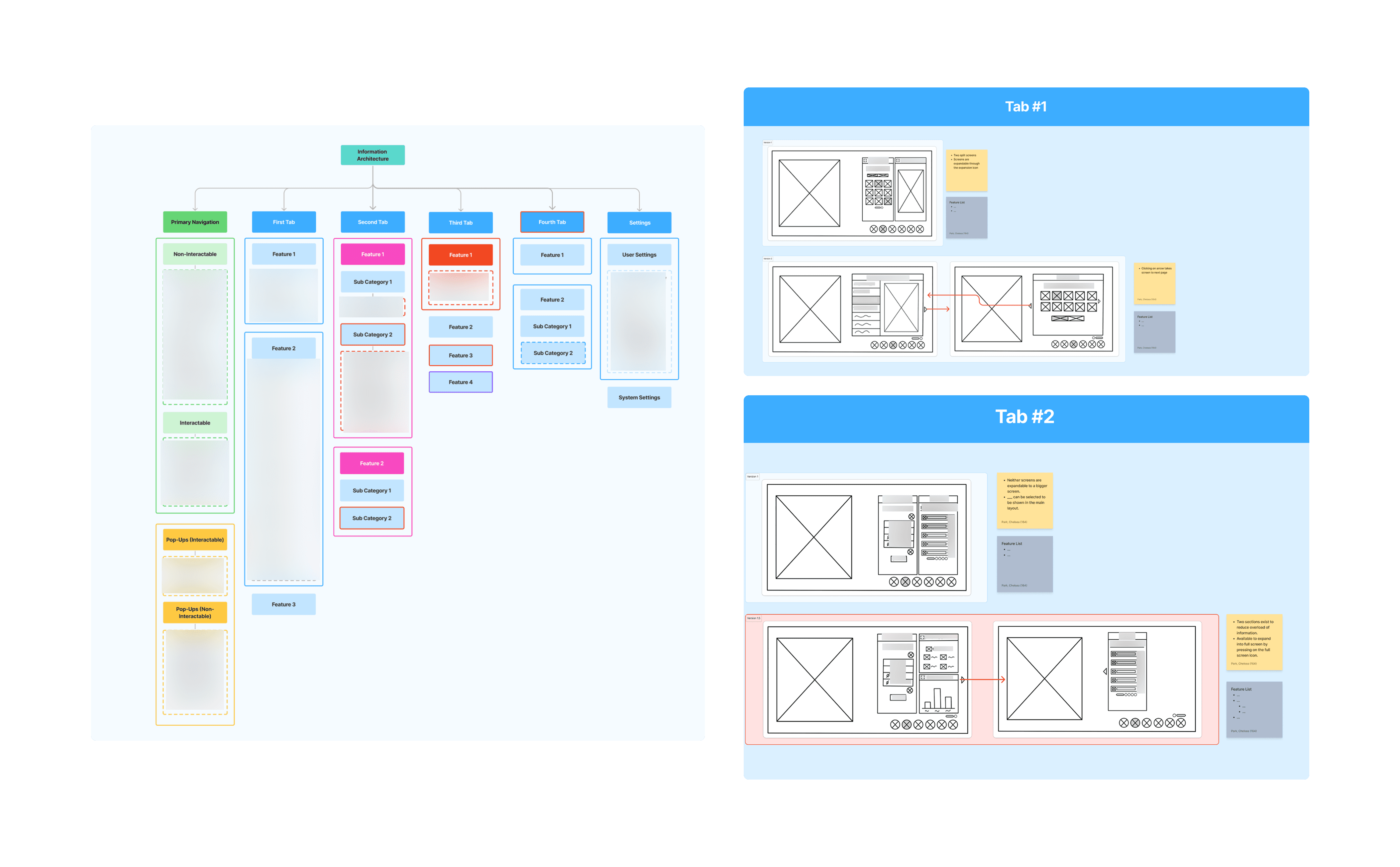
I translated these findings into an information architecture to organize complex information and future product requirements into a visualization. I also researched already existing features into depth, and handed off to design and engineering teams for future development.

Taking the new information architecture and UX structure I created, I designed mid-fidelity mockups of the new screen layouts. I also defined interaction patterns for primary vehicle controls, and uncovering the deep layers of interactions.

On-site User Interviews
I had the opportunity to meet directly with truck drivers who use our vehicles daily for their work, conducting interviews to understand their real-world experiences. We asked targeted questions about their pain points and everyday interactions. Our goal was to uncover usability challenges in our current design systems, and identify areas for improvement.
Reflection
Challenges
Entering the automotive industry without prior experience was definitely a challenge. It required me to quickly understand industry standards and limitations while balancing both company objectives and driver needs. I often needed clarifications, but I went step-by-step to understand the depths of my design projects. Receiving conflicting feedback further strengthened my ability to evaluate perspectives objectively and prioritize decisions based on real user impact.
Learnings
Throughout this experience, I deepened my proficiency in Figma while learning how to maintain consistent design decisions. Through hands-on experience in usability testing like planning testing sessions and asking questions, I was able to analyze feedback to identify areas for improvement. With members of various backgrounds and receiving criticism, I became more comfortable being opened to constructive feedback. Although I felt that my opinion didn't carry much weight, my mindset shifted, as I worked closely with my mentor and manager, becoming more proactive in reaching out for support when needed.